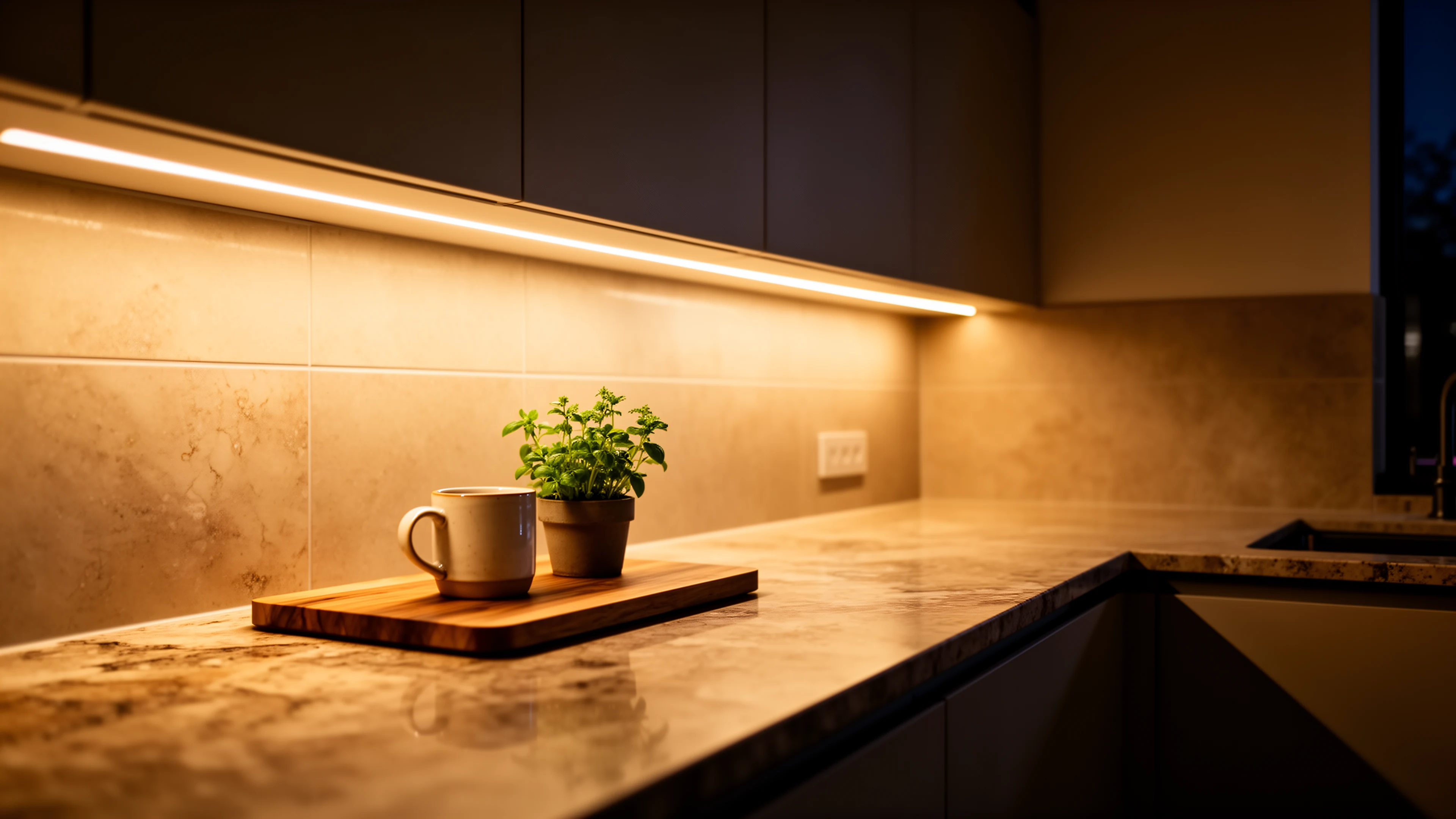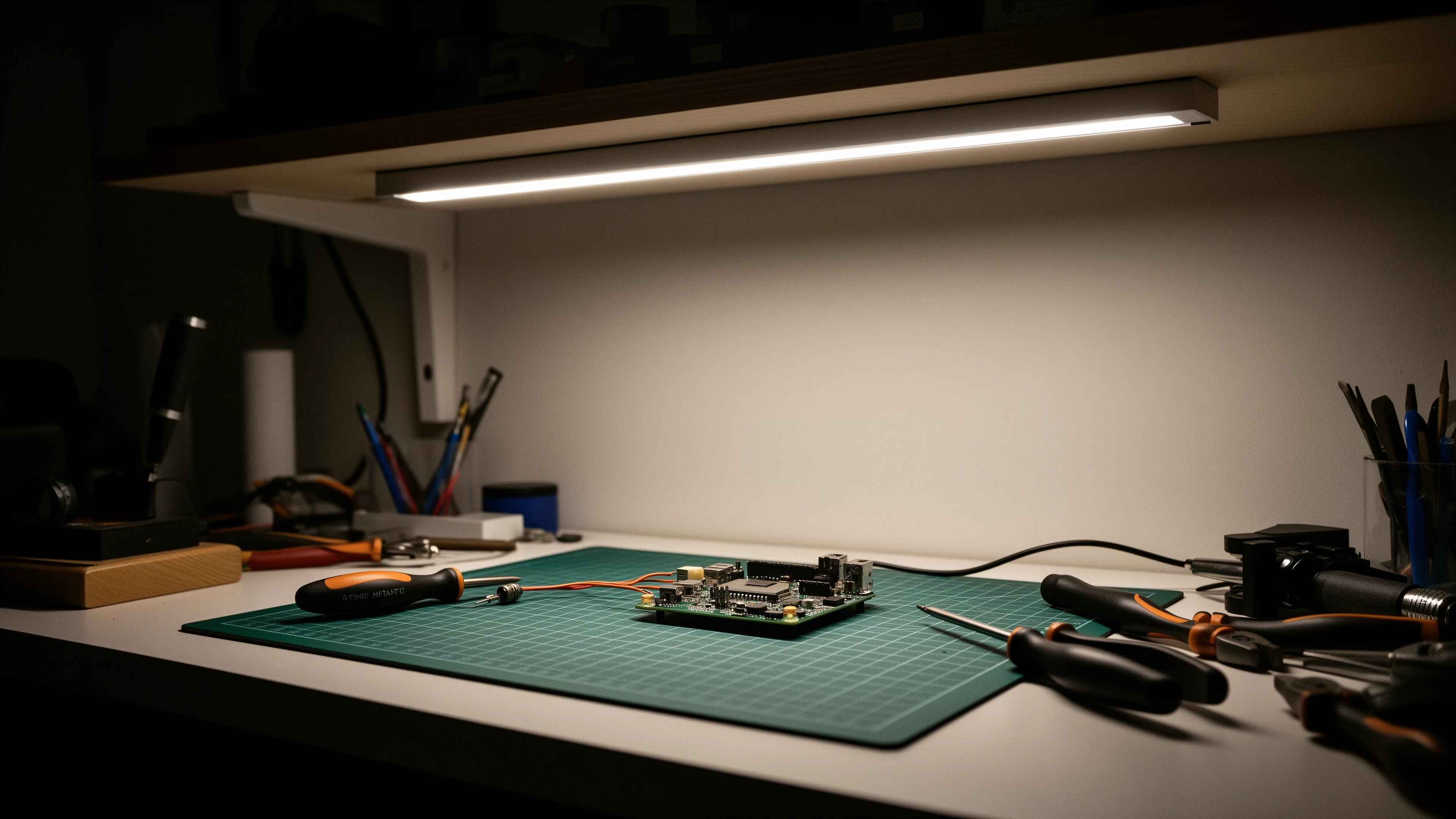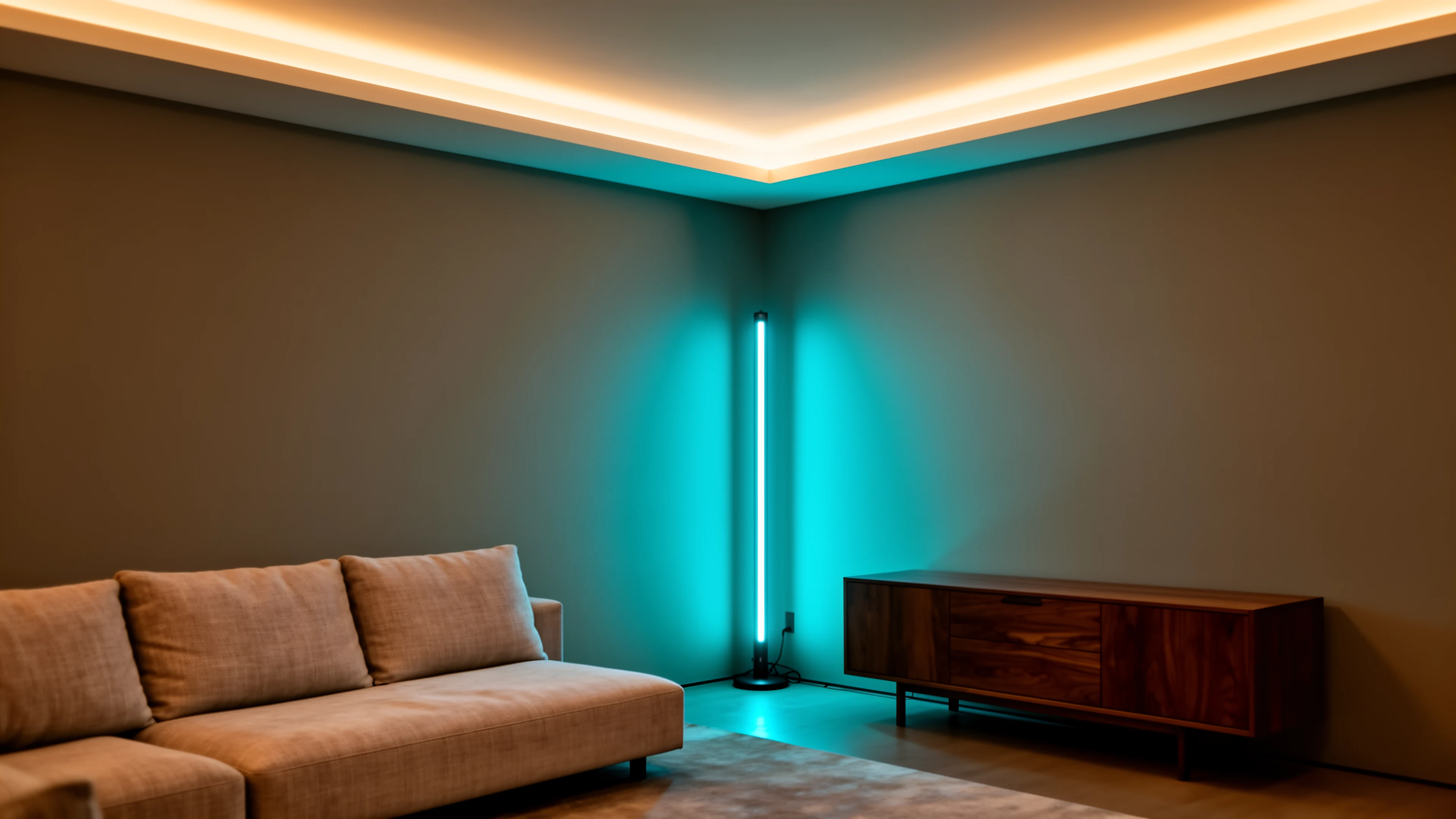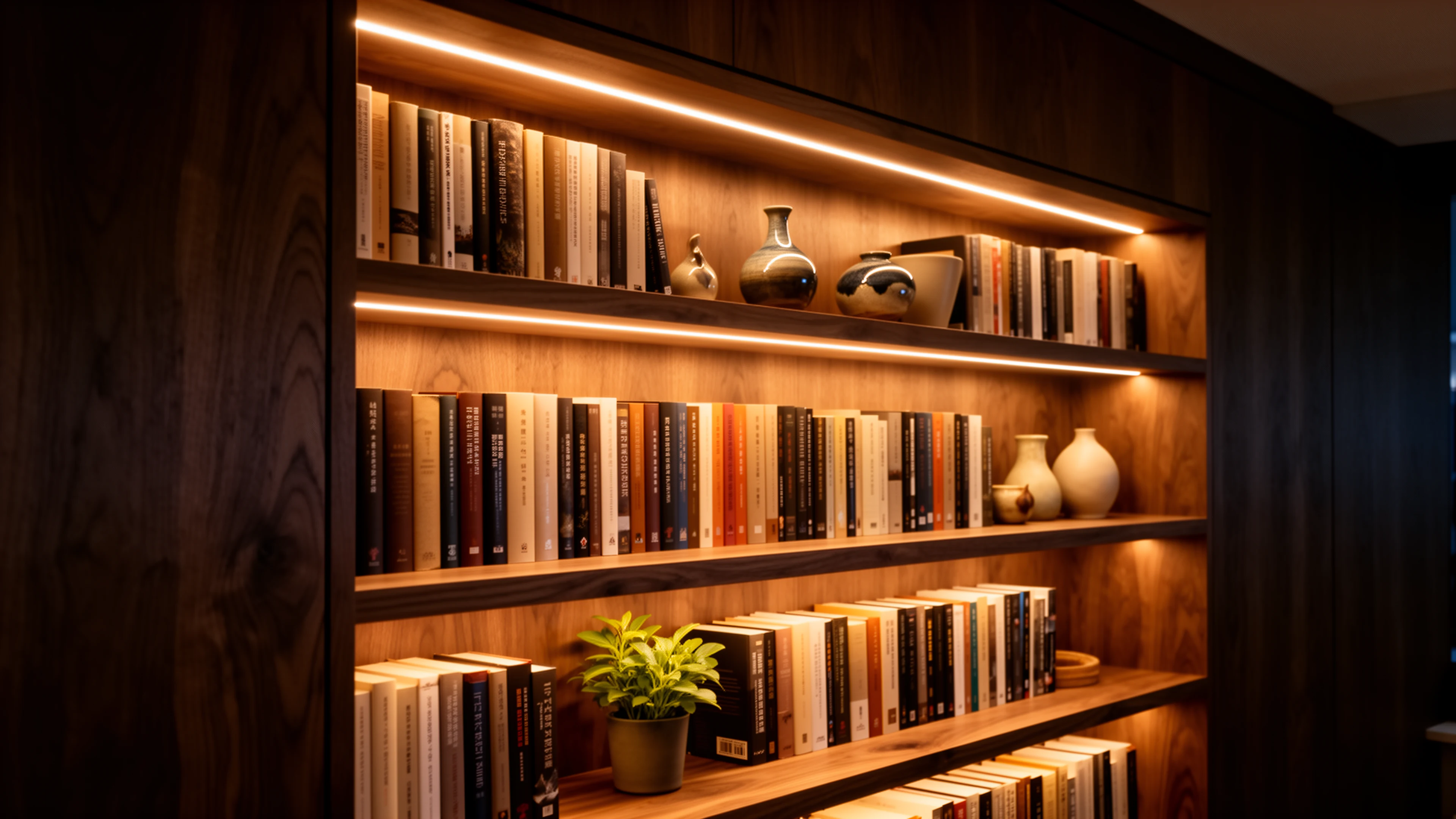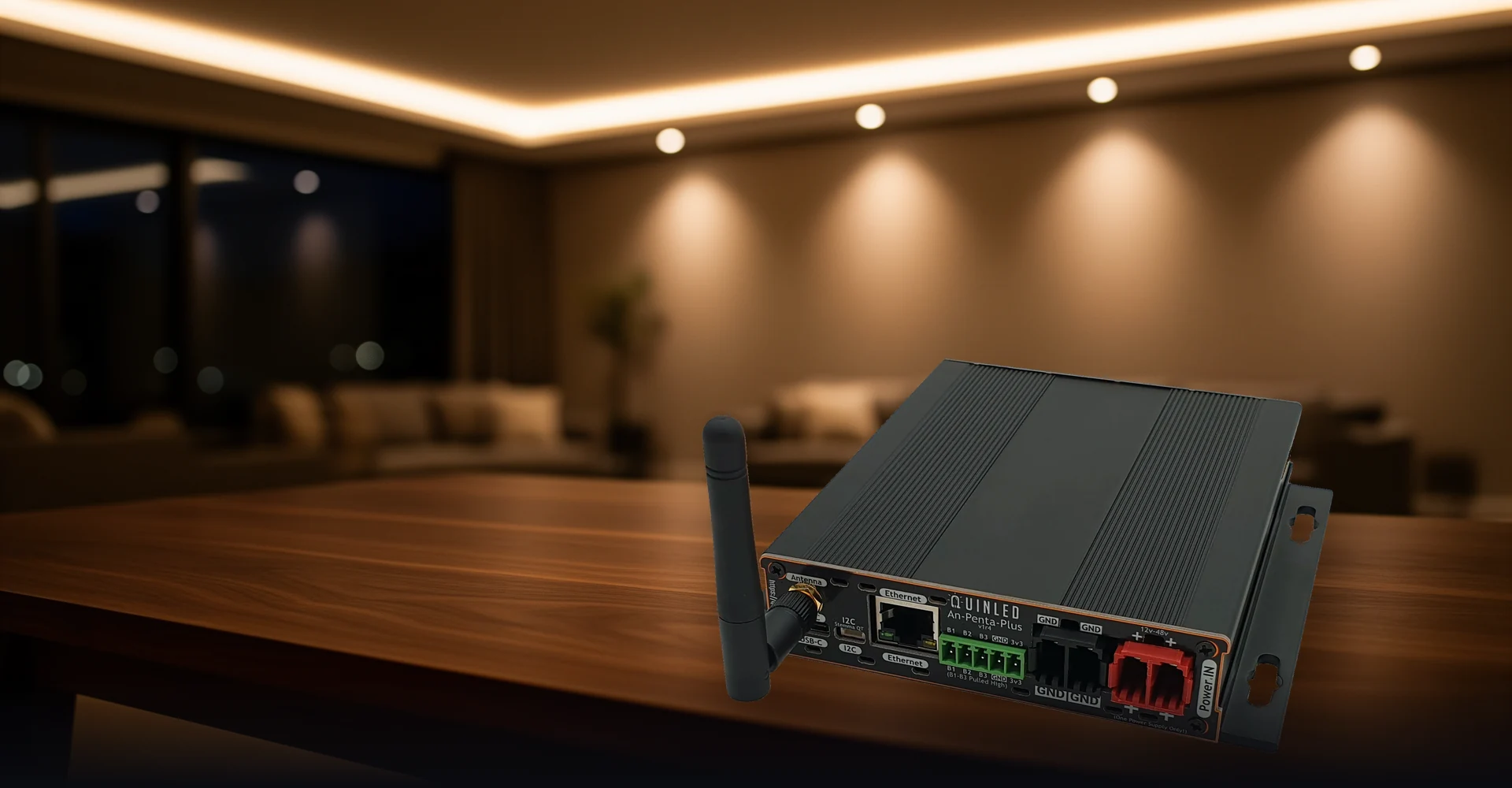
The An-Penta line drives analog LED strips — bright, high-CRI white and tunable white — at ~20 kHz, so it never bands or flickers on camera. There's a real fuse on every positive output. It runs ESPHome or WLED, local to your Home Assistant. No cloud, no lock-in.
The QuinLED An-Penta is a family of analog PWM LED controllers for non-addressable ("dumb") LED strips — single-colour white, tunable white (CCT), RGB, RGBW and RGBCCT — designed by Quindor, the engineer behind QuinLED. Three boards: the An-Penta-Mini (ESP32-C3 · 5 outputs · 10A total · from $29.99), the An-Penta-Plus (ESP32 · 5×10A + 1 digital output · Ethernet · 30A · from $39.99) and the An-Penta-Deca (ESP32 · 15 channels on 6 fused outputs · 30A · from $39.99). All of them dim at ~20 kHz PWM — far above any camera's shutter, so footage shows no banding — and every positive output carries a replaceable fuse. Firmware: ESPHome, WLED (v0.15-b3+) or Tasmota — fully local, native Home Assistant, no cloud. Compare the three boards →
Cheap analog dimmers chop their output a few hundred times a second. Your eye usually misses it — some people are more sensitive — but your camera never does. At normal shutter speeds those low frequencies show up as dark rolling bands marching through the frame — the tell-tale stripes in cheap-LED footage. The An-Penta runs at ~20 kHz by default (the gate-driver design has headroom far beyond that) — well above any shutter or sensor readout. The result is footage that stays clean all the way down the dimming curve. Deep dive: why LEDs flicker on camera →
A simulation of what a rolling-shutter camera sees — the budget controller bands, the An-Penta stays clean.
Independent reviewer The Hook Up put it on a flicker meter and a camera: "absolutely zero flicker or banding throughout the entire dimming range."
Pick by channel count and power. They share the same flicker-free PWM, the same per-output fusing, and the same ESPHome-or-WLED brain — so whichever you choose behaves the same way.
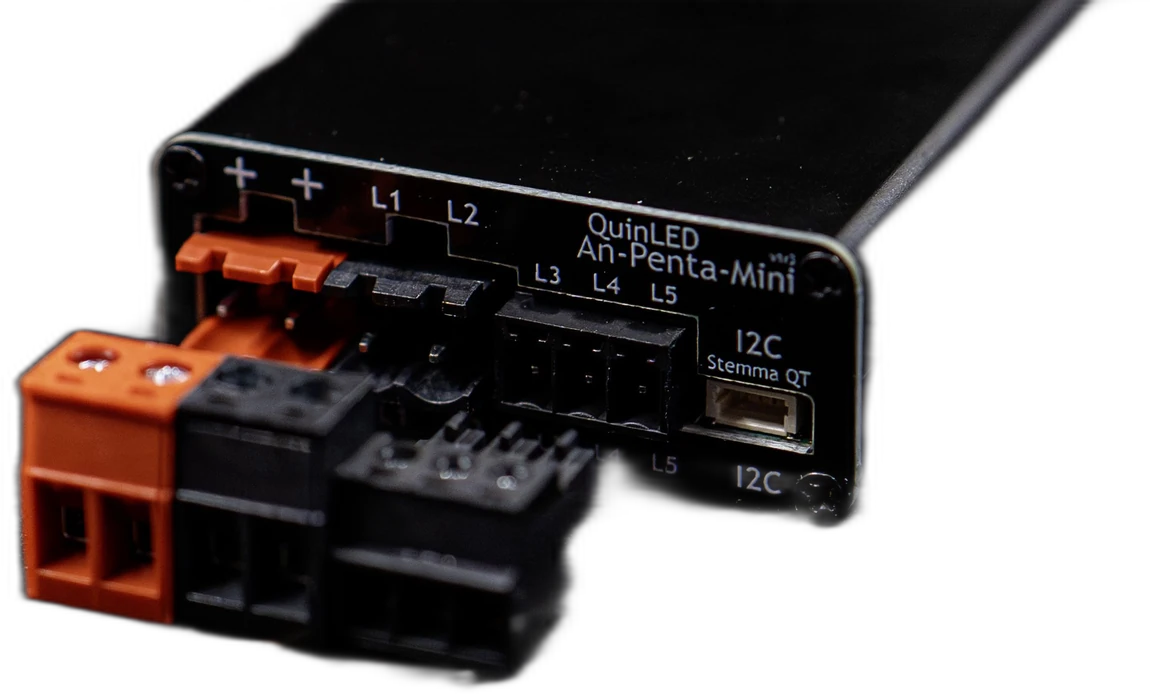
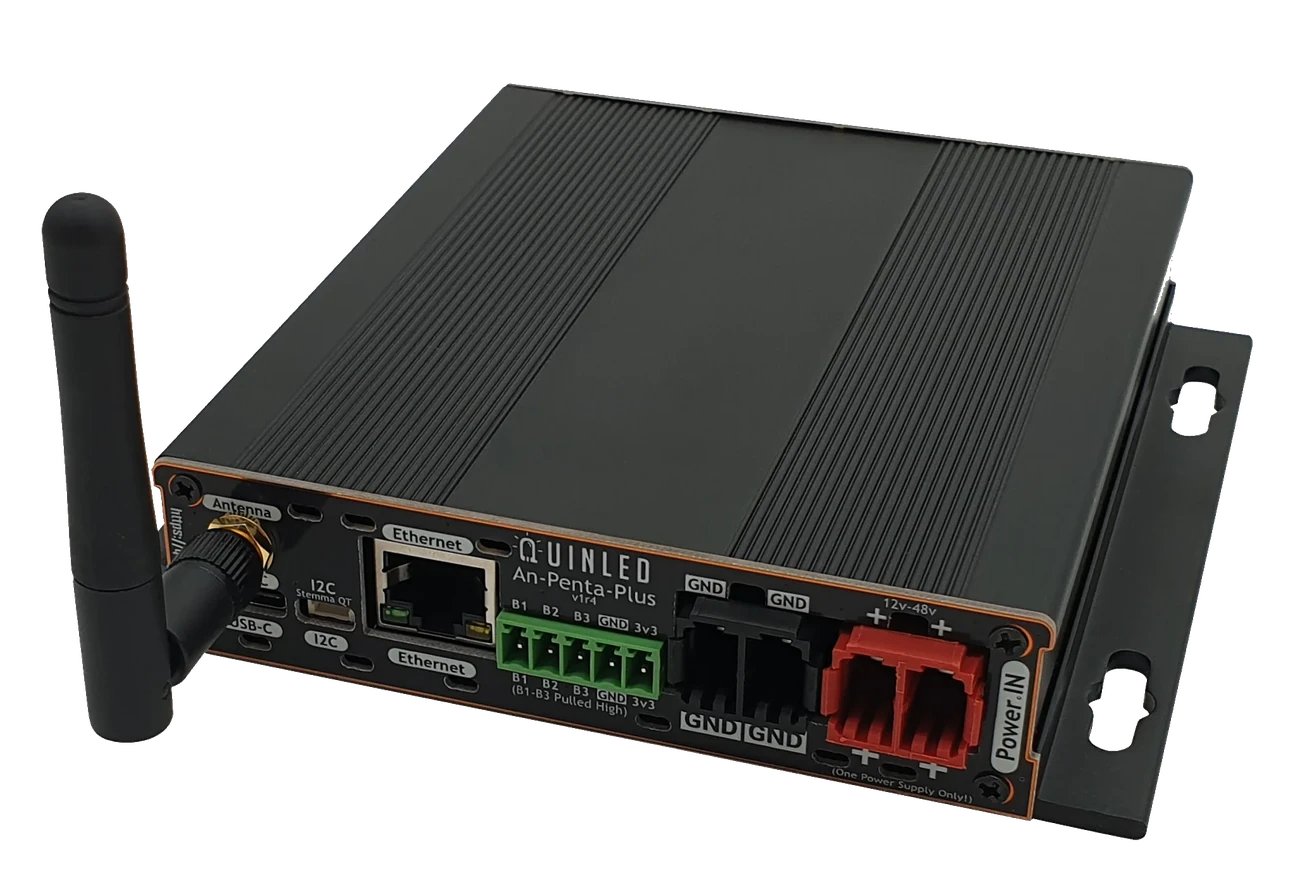
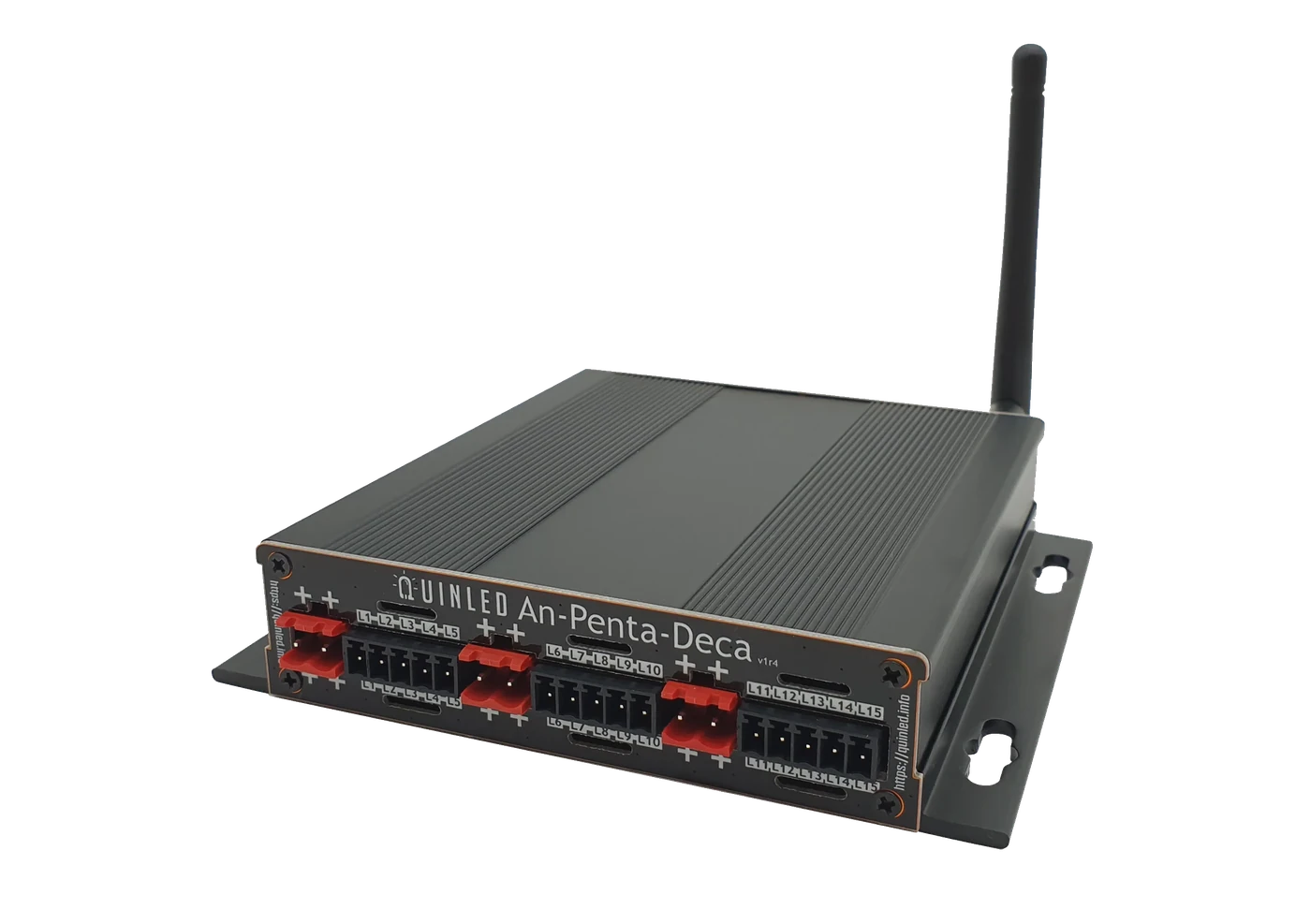
| At a glance | Mini | Plus | Deca |
|---|---|---|---|
| Dimming channels | 5 | 5 + 1 digital | 15 |
| Per channel | 2× 5A · 3× 3A | 10A | 5A |
| Total power | 10A | 30A | 30A |
| Ethernet | — | 10/100 | — |
| Sweet spot | One zone, done right | Whole-room power | Up to 3× RGBCCT zones |
Full comparison & chooser — which An-Penta should you buy? →
Most analog dimmers protect nothing past their input. Every An-Penta puts a small, replaceable fuse on each positive output — and the dimming channels fed from that output share its fuse — so an overload, a short, or a wiring slip blows a 10-cent fuse instead of pushing too much current through a wire. And an overheating wire is exactly what starts a fire. Far better that a fuse gives out than your wiring, your strip, or your house. Why per-output fusing matters →
Each positive output has its own fuse — and the dimming channels on that output share it. A fault isolates one output, never the whole board.
A replaceable 10-cent fuse on each positive output — the dimming channels on it share that fuse. Swap a fuse, not a board, and never risk your wiring or a smouldering strip.
12–48V in, up to 10A per channel and 30A total on the bigger boards. Drive long, bright, high-density white runs that addressable strips can't feed.
ESD-protected USB-C, a custom DC-DC supply, heavy decoupling and a finned-aluminium chassis. The boring details that let it run for years.
Addressable strips are great for colour and motion, but for white they fall behind: lower brightness, lower CRI, more compromise. Analog white and COB strips reach CRI 95+ and far higher output per metre — and the An-Penta drives them at full power. Connect a warm-white and a cool-white strip to the same board and the software does the rest: tunable white — a warm 2200K to unwind under in the evening, up to a bright 6500K when you need to actually see what you're doing. The tunable-white guide →
Drag to mix warm and cool. This is two channels (WW + CW) the An-Penta blends in software.
For analog and tunable white, ESPHome gives you the cleanest control — proper light entities, transitions and automations straight into Home Assistant over a local API. Don't run Home Assistant, or want the controller to work entirely on its own? Flash WLED and run it standalone from your phone. Either way it's local, yours, and account-free. ESPHome vs WLED for analog — the decision guide →


Native light entities for white, tunable CCT, RGB and RGBCCT. Smooth transitions, a local push API, and automations that just work.

Want it to run on its own — no Home Assistant, no server, nothing else to set up? Flash WLED, the world's most popular open-source LED firmware. PWM white, CCT and RGB are built in, and you drive it from your phone.
Short, honest explainers on the questions behind the boards — written from the same bench the hardware came from.
Every An-Penta comes from Quindor, the engineer behind QuinLED, with years of LED-controller designs trusted in homes and pro installs. That means real wiring guides, real answers, and a community that's seen your question before — not a slip of paper in the box.
Designed by Quindor · backed by 60,000+ subscribers on YouTube and 13,000+ makers in the Discord.